
Grove City City Directory Collections
Grove City’s historical directory trail has more than one shelf. The broad Franklin County collection is at Columbus Metropolitan Library’s Main Library Local History & Genealogy department, while Southwest Public Libraries and the Southwest Franklin County Historical Society provide local context that countywide books may miss. A volume is evidence only after its geographic coverage is checked. Columbus titles do not automatically include every Grove City household or address.
| Collection | Years | Where Held | Access |
|---|---|---|---|
| CML physical city directories | 1841 onward | CML Main Library LHG, 96 S. Grant Ave. | In-library collection |
| Digitized city-directory collection | 1840s onward, selected and in progress | CML Digital Collections | Online selected volumes |
| R.L. Polk Columbus City Directory | 1889–90 verified item | CML Digital Collections | Online scan |
| Franklin County phone books | 1914, 1926, 1932, 1935, 1936 | CML city-directory collection | Verified digital items |
| Columbus Telephone Directory | 1944 | CML Digital Collections | Online, title includes Grove City |
The list is a route, not a claim of an uninterrupted Grove City run. CML is digitizing selectively and its physical holdings extend farther than the current online shelf. Check the title page, place coverage, and surrounding years before treating a gap as a move or a death. The 1944 telephone title explicitly includes Grove City, but that fact should not be projected backward onto every earlier regional book.
Grove City Directories at CML
The Main Library holds physical city directories from 1841 and places its Local History & Genealogy collection on the third floor. Its Franklin County directory collection is self-serve, and the department also supplies microfilm and microfiche readers, scanners, copying tools, research computers, staff help, federal census microfilm, local yearbooks, maps, and historic newspaper access. More than 85,000 books and microfilm arrived with the Franklin County Genealogical & Historical Society library.
The Southwest Franklin County digital collection illustrates the local materials that can add names, photographs, and place context around a directory result.
Because only part of that collection is online, the item view is a starting point rather than a complete Grove City directory index. CML’s history staff can be reached at history@columbuslibrary.org when an online search leaves an uncertain title or volume.
Grove City Directory Editions Online
CML’s City Directory Collection is an ongoing digitization project that aims to include most city directories dating to the 1840s. Verified early titles include Kinney for 1845–46, Williams for 1856–57, and Lathrop for 1860–62, with multiple issues from the 1860s through the 1910s. The online grouping makes it practical to compare a surname across named volumes without presuming the whole shelf has been scanned.
The CML digital city-directory collection is the source for this online shelf.
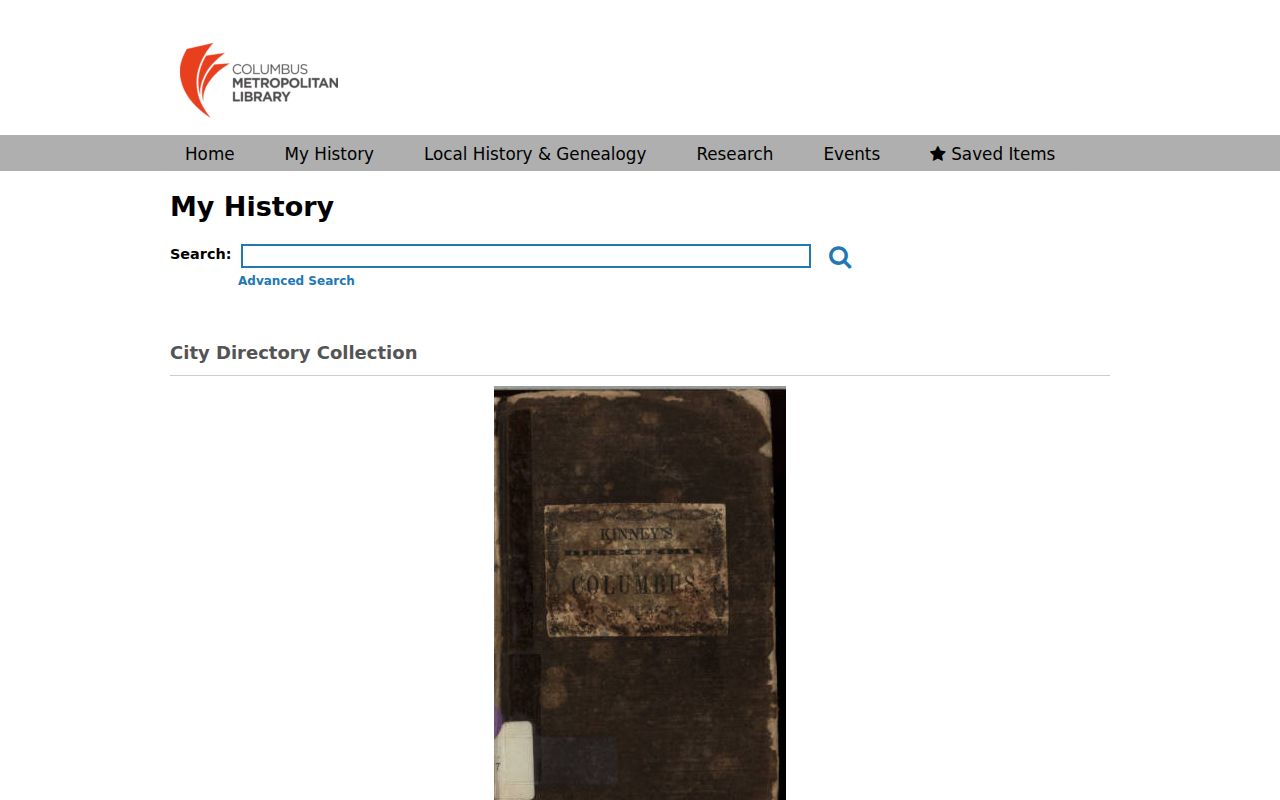
Open the individual volume and read its title and front matter before drawing a Grove City conclusion. Publisher changes, coverage notes, and abbreviations are part of the record, not decorative detail.
Reading a Grove City City Directory Entry
The verified 1889–90 R.L. Polk directory contains alphabetical listings for private citizens and businesses as well as sections for officers, schools, churches, banks, societies, and business information. A person entry can give a surname and given name, a spouse in parentheses when present, an occupation or employer abbreviation, and a residence or address. It identifies an occupant or association in that particular volume, not a legal owner.
| Name | Surname and given name, with the period’s exact spelling. |
|---|---|
| Family notation | A spouse may appear in parentheses where the volume includes one. |
| Work notation | Occupation or an employer abbreviation, interpreted from that volume’s key. |
| Residence | Address or residence notation for the date of publication. |
| Context | Directories may also index civic, school, church, bank, society, and business material. |
- Criss-cross directory
- An address-ordered or street-ordered section that can be read from a location toward listed occupants.
- Householder index
- An alphabetical finding aid for a household head or listed person, not a statement that every person in a home was indexed.
- Abbreviation key
- The volume’s front matter that defines period shorthand. Save it before expanding any abbreviation in notes.
Do not silently modernize a historical abbreviation. A later volume may show spouses, adult children, or different household details, so each entry must be read in its own year.
Grove City Street and Phone Clues
CML’s house-history guidance says annual directories list residents, addresses, and often occupations. Beginning in 1911, the collection includes a by-street and address section. That makes a later city directory useful in two directions: name to address in the alphabetical material, then address to a listed occupant in the street section. It still does not settle ownership, which requires parcel and deed research.
The 1944 telephone book is one of the clearest regional checks because its title expressly includes Grove City.
Dreher Simplex street and house guides from 1917–18 and 1929–30 are also digitized, but they are principally Columbus aids. Confirm Grove City coverage in each volume instead of treating a street guide as citywide proof.
Grove City Local History Routes
Southwest Public Libraries and the Southwest Franklin County Historical Society hold the hyperlocal route for Grove City, Urbancrest, and Franklin, Jackson, Pleasant, and Prairie townships. From Attics to Archives is curated by Grove City Library Information Services and is only partly digitized. The Grove City branch has local-history materials, limited genealogy and yearbooks, in-library Ancestry Library Edition, and NewsBank access to The Columbus Dispatch.
The Southwest Franklin County Historical Society’s public information is the source for its museum and local-history contact route.
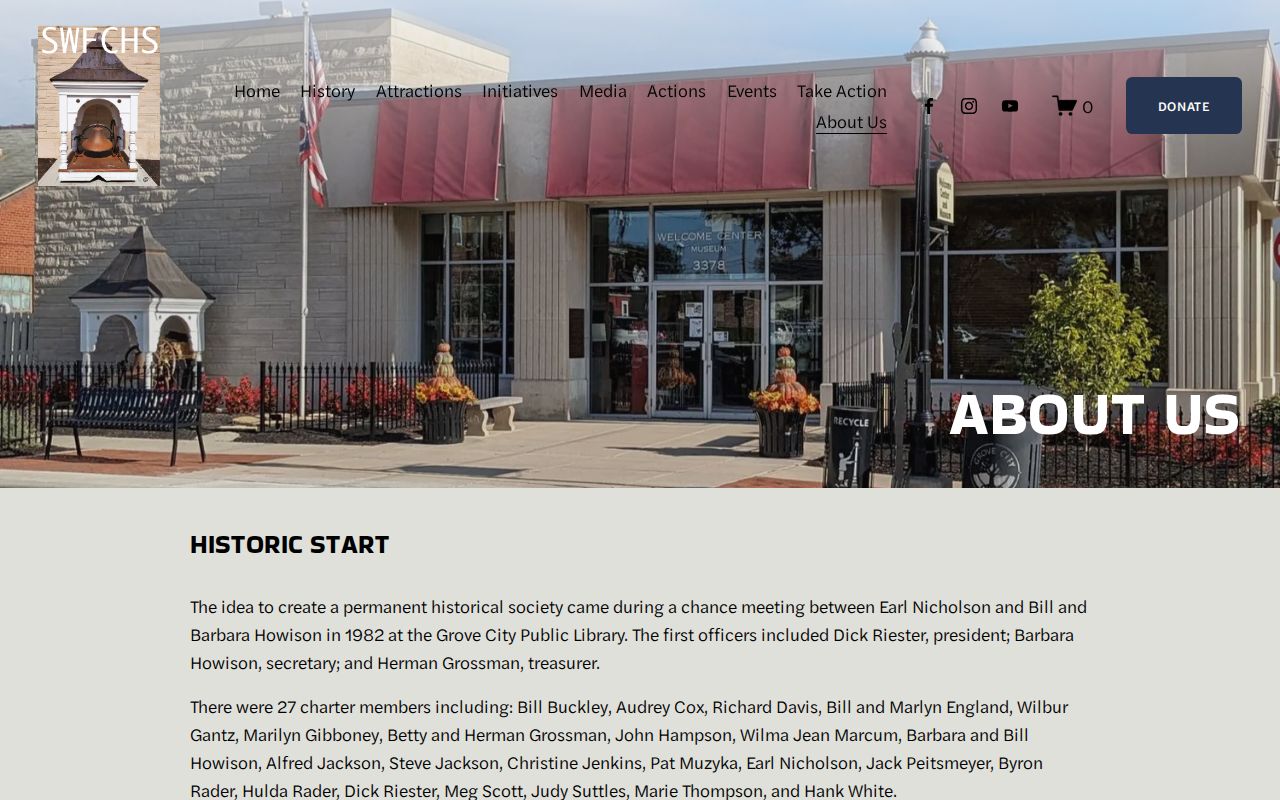
Oral-history previews are online, while complete recordings and transcriptions are viewable at Grove City Library. They can supply family or neighborhood context, but they should not be treated as proof of a person’s current residence.
Grove City Directory Evidence Checks
A useful local correction is to treat a directory entry as one dated observation. The CML house-history method joins an Auditor parcel, a Recorder deed, yearly directory occupants, census enumeration, and historic maps. For older buildings, CML cautions that a pre-1920 Auditor year-built value may be approximate or wrong. A match gains weight when several dated sources agree.
Franklin County’s historical deed indexes cover 1804–1913 through a grantor, grantee, and surname-page route. Some losses from the 1879 fire were reconstructed. That history explains why a missing deed image or index trail needs a closer look, not an invented explanation. The Recorder’s historical guidance and CML staff are better follow-up channels than assuming a universal online run.
Tracing Grove City City Directories
City directories can bridge the years between federal censuses when a household appears in more than one book. Start with a surname, retain the exact form of the name, and record the address and work notation. Pair the directory year with an available census year and the parcel or recorded-document trail for the address. The method is especially useful around Town Center, where the original 1852 plat, legal description, and later address may need to be compared.
- Locate the surname in a volume whose title and coverage have been checked for Grove City or the relevant Franklin County area.
- Record the printed name, address, occupation notation, page, and abbreviation key rather than relying on a transcription.
- Move forward and backward through available years, noting a changed address, altered spelling, or disappearance.
- Use the 1911-and-later street section when available to test an address against the alphabetical finding.
- Compare a resulting address with the parcel, Recorder deed path, census, newspaper, probate, or local-history material appropriate to the date.
A disappearance can reflect a move, death, changed listing practice, a missed scan, or coverage that never included the address. Check an adjacent year and a different record type before choosing among those possibilities. For a current address-based trail, use the Grove City street directory records route rather than extending a historical listing into the present.
Note: The Franklin County Genealogical & Historical Society has suspended regular research service for the rest of 2026, so confirm current assistance before planning a visit.